Height percentiles
CDC NHANES distributions by gender, tuned so about 15 percent of men reach six feet.
Set your preferences and see the true share of the population that matches. No sign-up, no tracking, just the numbers behind the male and female delusion debate.
Sample result
Woman seeking a man, 27 to 37, six feet or taller, 100k income, degree, single, fit
143,570
US matches
1 in 894
Rarity
5.4/10
Delusion
Selective standards
Run your own numbersThe calculator does not guess. Each preference maps to a published distribution, and the filters combine with a documented correlation adjustment.
CDC NHANES distributions by gender, tuned so about 15 percent of men reach six feet.
Census CPS and BLS earnings curves for every threshold up to 1M dollars and beyond.
Census ACS attainment shares, from high school through graduate degrees.
Age and gender specific married-versus-single rates as a real availability proxy.
CDC obesity prevalence so a no-obesity filter reflects the actual population.
Selecting more groups widens your pool instead of shrinking it, using ACS shares.
Three steps, about a minute, no account.
Three quick steps: your stats, your preferences, and your lifestyle filters.
Each filter is matched against the real US distribution and combined with a correlation adjustment.
See the matching pool, a 1-in-X rarity, your delusion score, and the filter costing you the most.
Three example searches, scored by the same engine your answers run through. Notice how fast the pool shrinks once a second filter stacks on the first.
Single, non-obese, ages 25 to 45
1 in 9
2.4/10
6'0"+, earns $100k+, single, ages 27 to 40
1 in 476
5.0/10
6'2"+, $150k+, degree, single, fit, ages 28 to 36
1 in 8,411
6.9/10
The score rates how statistically rare your combined standards are, from 1 (matches a large share of people) to 10 (a vanishingly small pool). Here is how to read it.
1 to 3
Your preferences match a wide slice of the dating pool. Options are plentiful.
4 to 5
Reasonable filters that still leave a healthy pool. One tweak spot to watch.
6 to 7
Several filters are compounding. The pool is now a small fraction of a percent.
8 to 10
The exact mix you want is statistically rare. Relaxing one filter helps the most.
Use cases
It started as a way to settle the male and female delusion debate. People use it for a lot more than that.
Turn a long list of must-haves into one honest pool size, then decide what actually matters.
Friends arguing about standards can run the exact filters and compare scores side by side.
A concrete, data-backed prop for articles, videos, and sessions about realistic expectations.
See how independent probabilities multiply and where correlation adjustments change the answer.
Read how the picture shifts across the US, UK, Canada, Australia, and Germany.
A quick gut check on whether the bar is set where you thought it was.
The dating standards calculator turns a list of preferences into a single, honest number: the share of people who meet all of them at once. Most standards sound reasonable one at a time. A certain height, a comfortable income, an age range, a preference for single and healthy partners. Each is common on its own. Stacked together, they multiply, and the pool can collapse from half the population to a fraction of one percent.
To keep the math honest, the engine does not treat every filter as fully independent. Income and education move together in the real world, so multiplying their raw probabilities would understate the true pool. The calculator applies a documented correlation adjustment that anchors the joint probability to the more restrictive filter, which widens the estimate back toward reality. You can read the exact formula and every data source on the methodology page.
The result is not a verdict on whether you should change. It is a mirror. It shows which single filter is doing the most damage to your options, then lets you relax it and watch the pool grow. Use it to decide what genuinely matters to you, and treat the delusion score as a conversation starter, not a diagnosis.
Explore
Free tools, guides, statistics, and dating concepts, all built on the same US Census, CDC, and BLS data.
Height and income percentile, age gap, and dating pool calculators.
Open toolsHow the calculator works, the score explained, and the data sources.
Read guidesHeight, income, education, and singles data behind dating standards.
See the dataDating pools, hypergamy, the 80/20 rule, and realistic standards.
Learn moreYes. The calculator is free, needs no account, and runs entirely in your browser. There is nothing to install and nothing to pay.
The estimates use published US government datasets: Census ACS for age and education, CDC NHANES for height and obesity, and Census CPS plus BLS for income. Results are statistical estimates for the US adult population, not a headcount of real dating profiles.
The delusion score is a 1 to 10 rating of how statistically rare your combined standards are. A low score means your preferences match a large share of people; a high score means the specific mix you want is uncommon.
Yes. You choose whether you are looking for men, women, or either, and the calculator uses the matching population and gender-specific distributions for height, income, and the rest.
Never. The calculation happens on your device. Your inputs are not transmitted, saved, or sold, so there is nothing to share.
From the blog
Deep dives on height, income, age, and the math that shapes who is realistically in your dating pool.
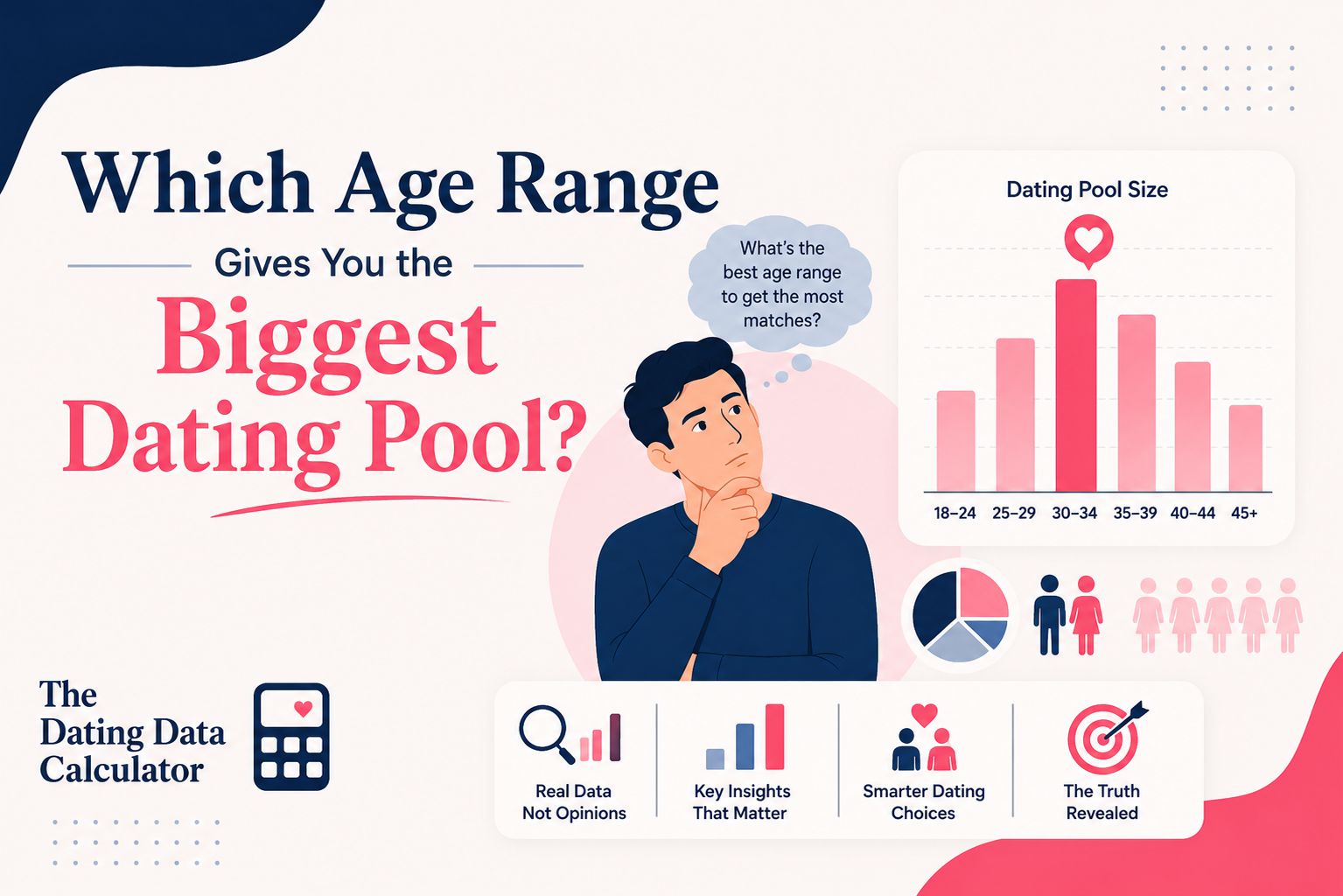
Raw headcount climbs the younger your filter goes, but the widest band most searchers can realistically use is about 30 to 39. Here is the cohort size, the unmarried share, and the resulting pool for every band.
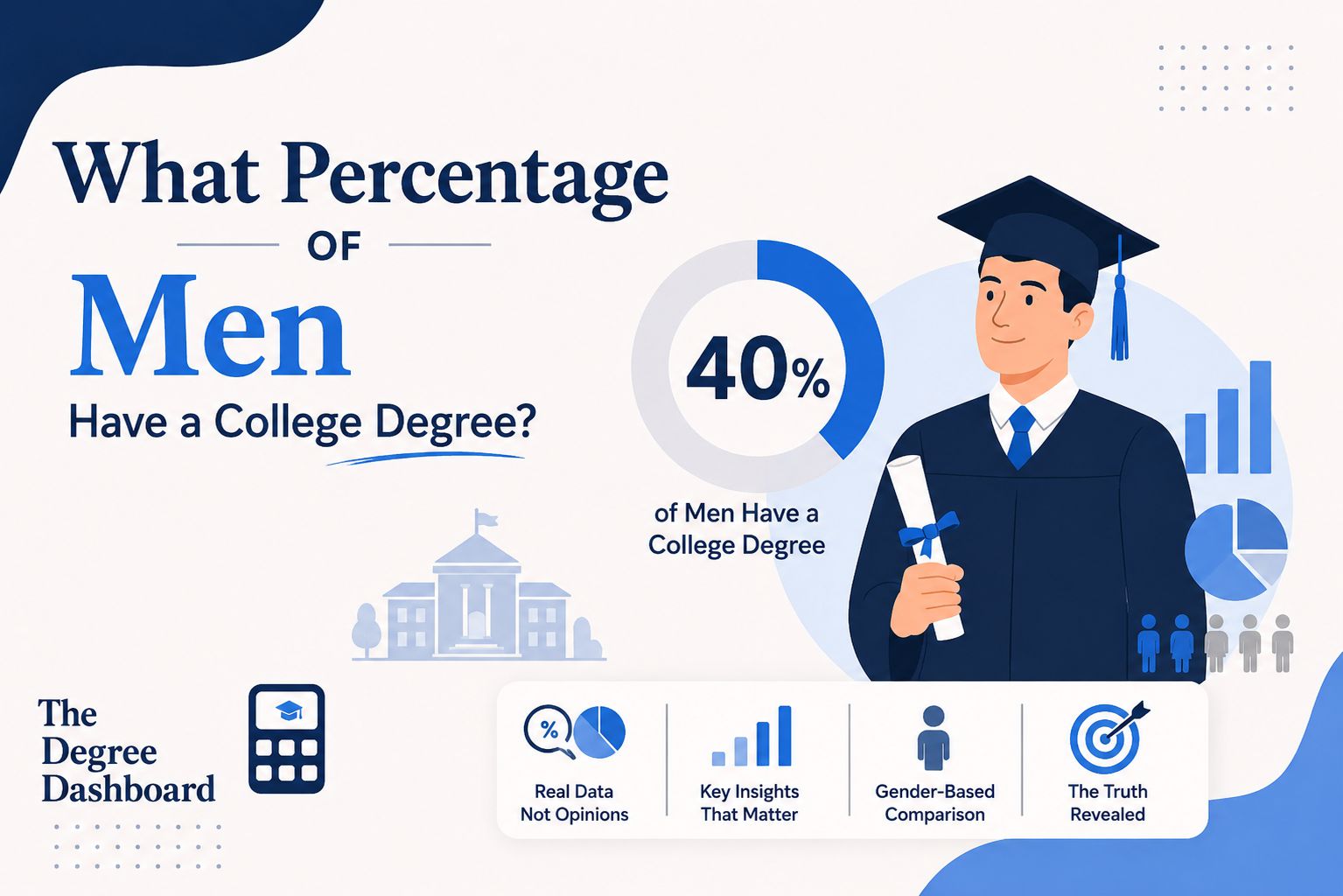
About 37% of US men aged 25 and older hold a four-year college credential, and roughly 46% have an associate degree or better. Here is the full breakdown by level and age, plus what an education filter really costs.
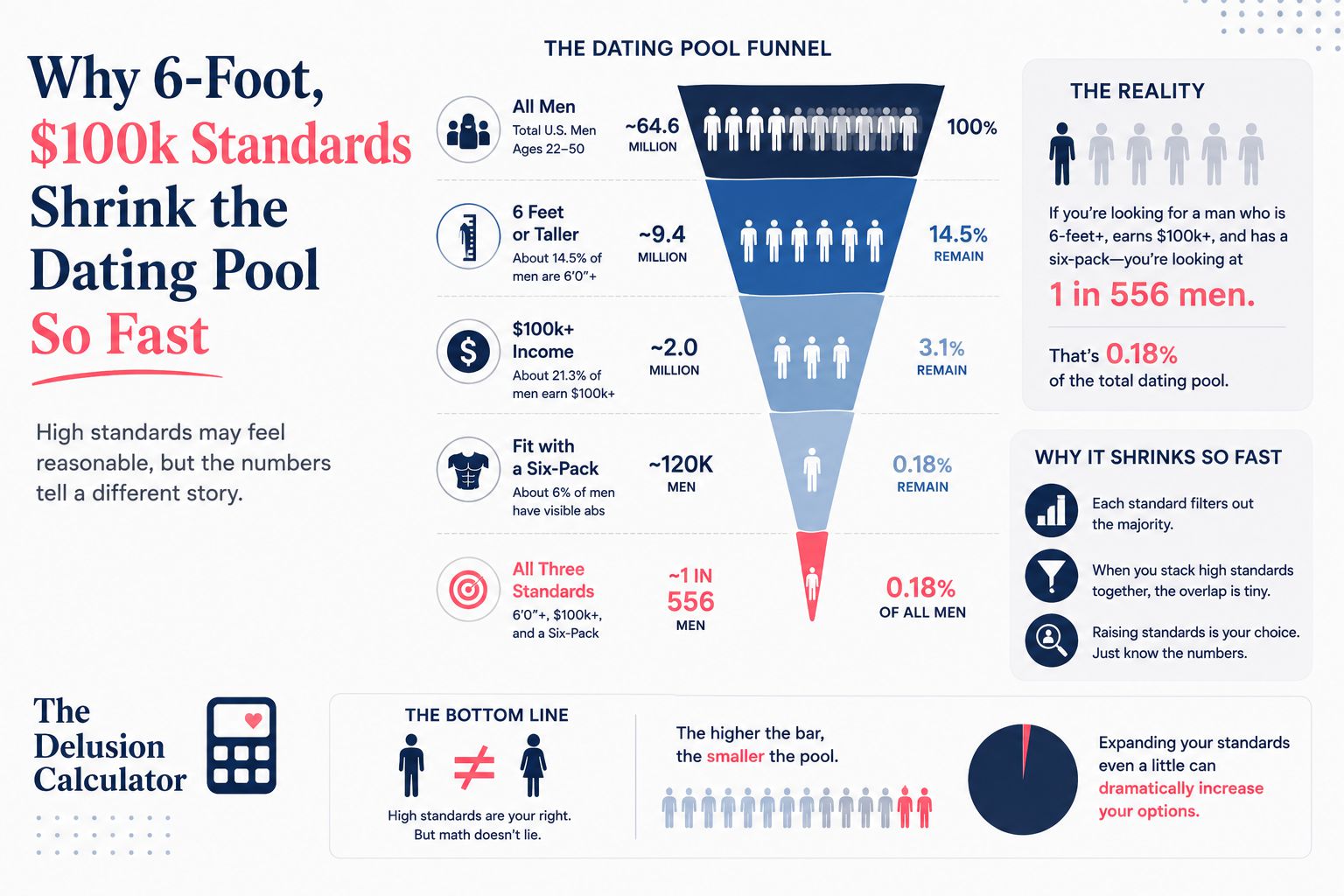
The pool does not dry up. It changes shape. Here are single counts by age band, the sex ratio that flips after 40, and why the same age group is 25% or 86% single depending on who is counting.
It takes about a minute. No sign-up, nothing stored, just the data behind your standards.